iPhone SE (2020) After 6 Years Review (2026): My Honest Long-Term Experience
Introduction
The iPhone SE (2020) After 6 Years Review isn’t just about specifications—it’s about what living with this phone has actually been like over nearly six years.
Some smartphones impress you in the early weeks. Others quietly earn your trust over the years. The iPhone SE (2020) falls into category two.
I bought this phone on October 16, 2020, during Flipkart’s Big Billion Days sale. At the time, it was my very first iPhone, and I had clear reasons for choosing it. Six years later, although smartphones have evolved significantly with bigger displays, multiple cameras, AI-powered features, and larger batteries, the iPhone SE (2020) still remains in my collection—and remarkably, it’s still running on its original battery without ever needing a repair.
This isn’t a review based on a few weeks or months of usage. It’s the story of living with the iPhone SE (2020) for six years—through software updates, battery aging, changing expectations, and everyday life.
In this long-term review, I’ll share what it was really like to own Apple’s most affordable iPhone for such a long time, what impressed me the most, what didn’t age well, and whether it still holds a special place in my tech journey today.
Why I Bought the iPhone SE (2020)
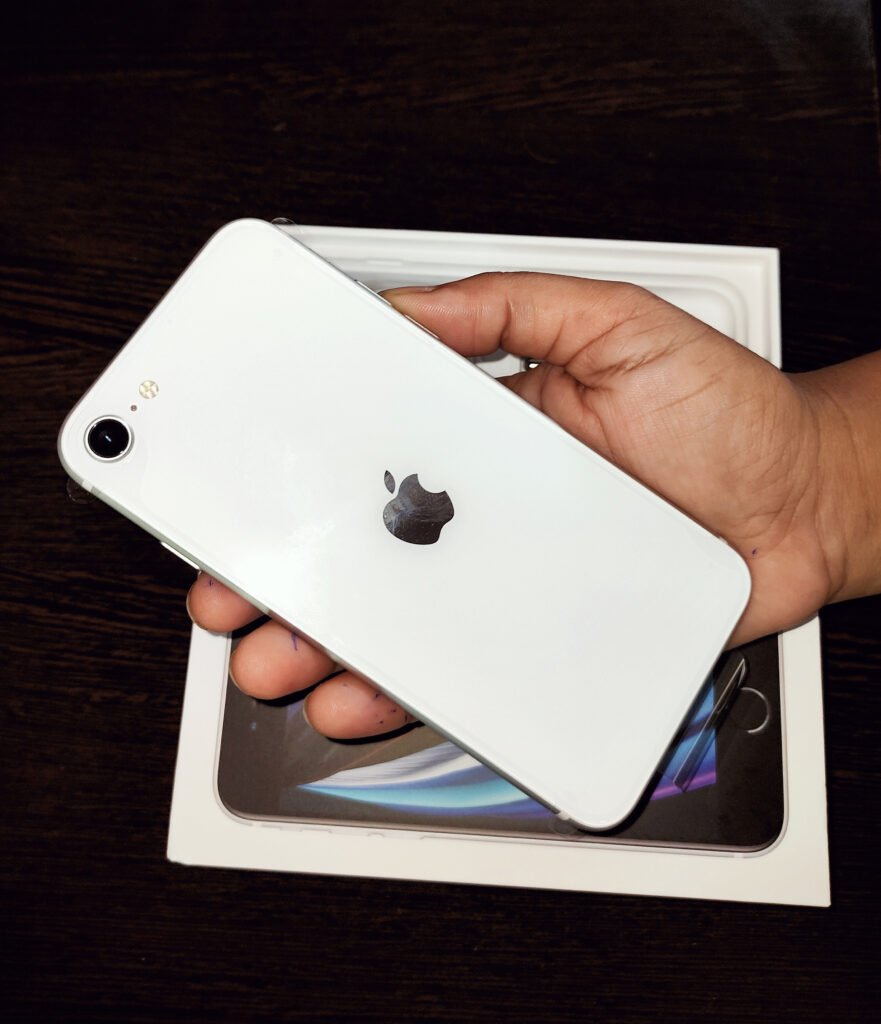
Buying the iPhone SE (2020) wasn’t an impulsive decision. I purchased it on October 16, 2020, during Flipkart’s Big Billion Days sale for ₹29,749, but the decision had taken shape long before I clicked the “Buy Now” button.
Before buying it, I spent a lot of time researching the phone. I watched reviews from several trusted tech creators, especially MKBHD, to understand both its strengths and its compromises. My goal wasn’t to own an iPhone just because of the Apple logo. I wanted to be sure that it could genuinely meet my needs for years to come.
At that time, I was using an ASUS smartphone, but I was looking for something fundamentally different. My priorities were clear: a clean and intuitive user interface, a dependable camera, a fast processor, long-term software support, and stronger privacy. The iPhone SE (2020) checked each of these boxes, making it the obvious choice for me.
Although I had seen friends using iPhones before, this was my first personal experience with Apple’s ecosystem. I still remember the moment I first held the phone. It instantly felt like I was holding a truly premium product. At the same time, I also had the confidence that this wasn’t a phone built just for the next year or two—it felt like something designed to stay reliable for years.
Looking back after six years, I can confidently say that the reasons I bought the iPhone SE are the same reasons it stayed with me for so long. Not every expectation was fulfilled perfectly, but the core experience that convinced me to buy it in 2020 has remained surprisingly consistent throughout its life.
iPhone SE (2020) at a Glance
Before diving into my six-year ownership experience, here’s a quick overview of the iPhone SE (2020) and its key specifications.
| Specification | Details |
| Display | 4.7-inch Retina HD LCD |
| Processor | Apple A13 Bionic |
| Rear Camera | 12MP Wide |
| Front Camera | 7MP |
| RAM | 3GB |
| Storage (My Unit) | 128GB |
| Battery | 1,821mAh |
| Charging | 18W Fast Charging (supported), Qi Wireless Charging |
| Water Resistance | IP67 |
| Security | Touch ID |
| Software at Launch | iOS 13 |
| Latest Software Used | iOS 26.6 |
Why I Chose the 128GB Variant
Instead of buying the base 64GB model, I chose the 128GB version because I already knew I wanted to keep this phone for many years. Spending a little extra upfront felt like the smarter decision, and looking back after six years, I believe it was absolutely worth it.
Design & Build Quality After 6 Years
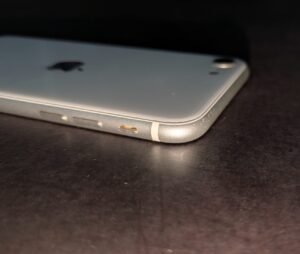
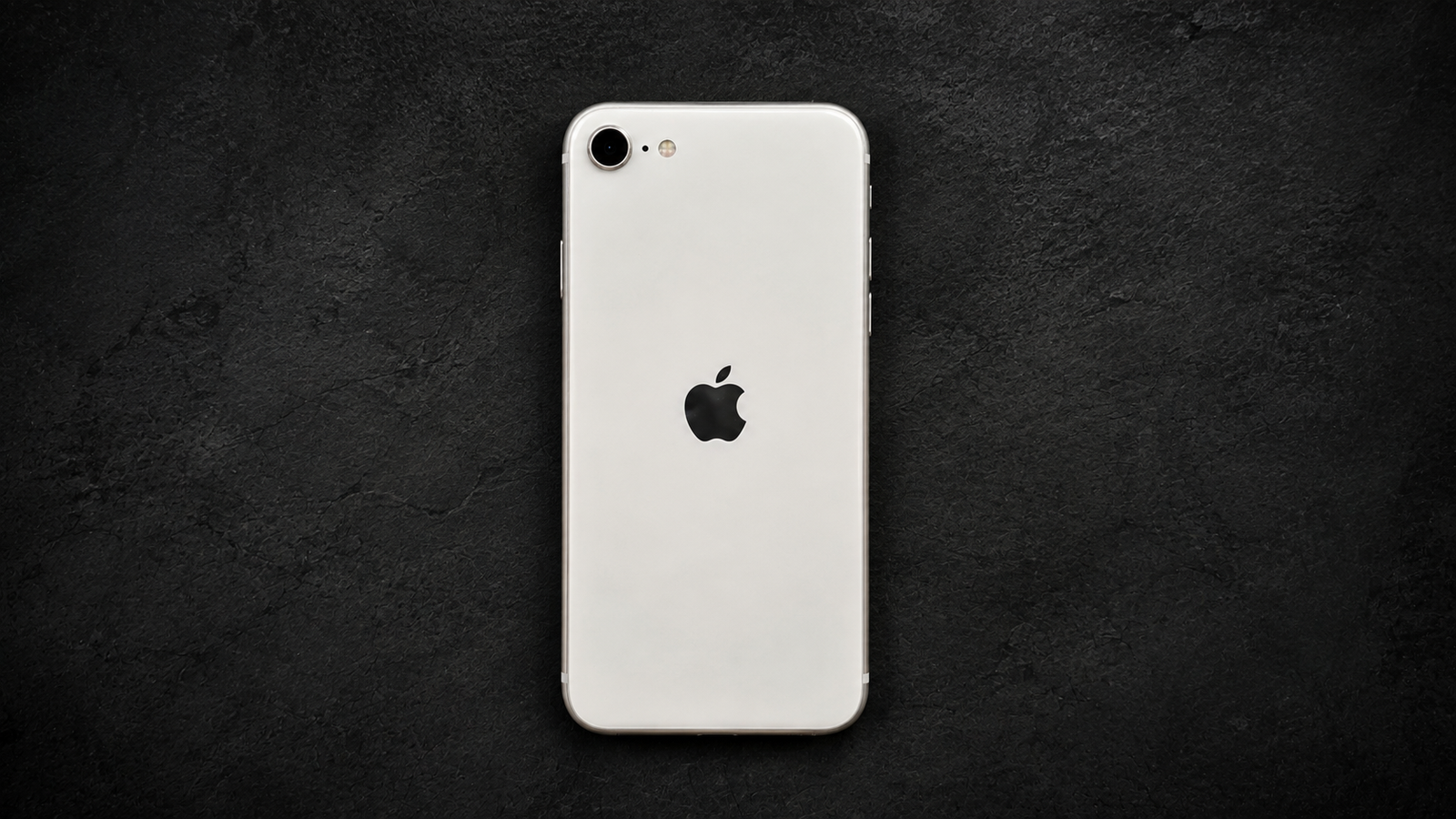
One of the biggest reasons I wanted to own an iPhone was its reputation for premium build quality. Six years later, I can confidently say the iPhone SE (2020) has met that expectation. Even today, the phone feels surprisingly premium and incredibly comfortable to hold. Its compact size makes one-handed use effortless, and despite being much smaller than modern smartphones, it never feels cheap or outdated in the hand. In fact, if you hand it to someone today, they would probably never guess that it has already been in daily use for six years.
Like any phone that’s been used for this long, it has picked up a few signs of ageing. The aluminium frame now has some visible scratches, but the back glass remains in excellent condition without any cracks. Since day one, I used the phone with a protective case, which undoubtedly helped preserve its overall condition. After around three years, I stopped using the case altogether and continued using the phone as it was.
One interesting thing about this phone is that I have never accidentally dropped it myself during all these years. The only significant fall happened a few months ago when my nephew accidentally dropped it onto the floor. Fortunately, I had a Spigen tempered glass installed, which protected the display completely. The phone survived without any damage.
Most hardware has also aged remarkably well. The power button, mute switch, and Touch ID button still work reliably, while the Touch ID sensor remains reasonably fast even after years of use. The only noticeable change is that the volume buttons feel softer than they did when the phone was new, although they continue to function properly.
The Lightning port still holds the charging cable securely, but years of everyday use have allowed dust and pocket lint to accumulate inside the port. Similarly, the speaker grille has collected a fair amount of dust over time. I used to clean it regularly in the early years, although I don’t pay as much attention to it now.
Overall, from a durability standpoint, the iPhone SE (2020) has aged far better than I expected. Considering it has never needed repair in six years, its physical condition is genuinely impressive.
Display Experience After 6 Years
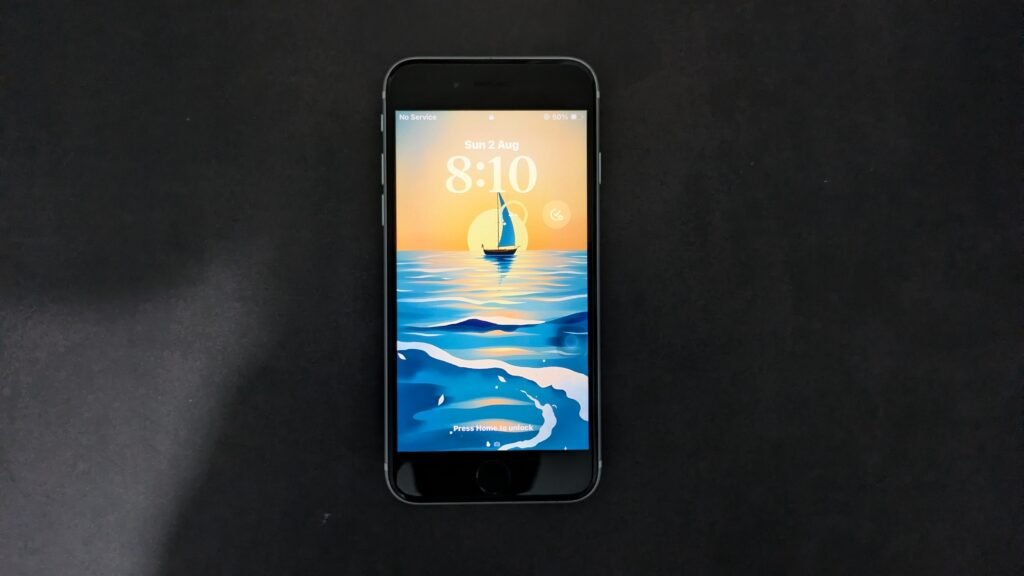
The display has always been one of the most debated aspects of the iPhone SE (2020). On paper, it may not look impressive by today’s standards, but living with it for six years tells a much more interesting story.
Even in 2026, the first thing I feel whenever I look at this display is that it’s small but beautiful. Despite its size, the screen still appears sharp, crisp, and pleasant to look at. Apple’s Retina HD LCD may no longer be cutting-edge technology, but it has aged far better than I initially expected.
Having used the Google Pixel 7a with its OLED display, I can clearly see the difference. The Pixel’s screen offers deeper blacks, higher contrast, and a more modern viewing experience. However, that doesn’t make the iPhone SE’s display look bad. Even today, its colours remain natural, accurate, and surprisingly satisfying.
Instead of trying to look overly vibrant or exaggerated, the display feels carefully calibrated, making it comfortable to use for long periods.
The biggest weakness today is undoubtedly its outdoor brightness. Under direct sunlight, the display is barely visible. Compared to modern smartphones, this is one area where its age becomes obvious. Indoors, however, the experience is still perfectly enjoyable, and I rarely find myself wishing for a brighter screen.
Watching videos is where my opinion becomes a little mixed. The display itself isn’t the problem. In fact, for an LCD panel, it still looks vibrant and supports HDR and Dolby Vision content on compatible platforms, which genuinely improves the viewing experience. The real limitation is its 4.7-inch size. Modern movies and videos are designed with much larger displays in mind.
On the iPhone SE, the small screen and thick bezels make content consumption less immersive. Black bars around many videos become much more noticeable, and although the display quality remains impressive, the compact size prevents it from showing its full potential.
Interestingly, reading has always been a much better experience than watching videos. Whether it was reading books on Kindle, going through PDF documents, checking emails, or simply browsing social media posts, I never found the display uncomfortable. In fact, its sharpness and natural colour reproduction made long reading sessions surprisingly pleasant.
Gaming tells a similar story. During the COVID lockdown, my friends and I spent countless hours playing Call of Duty: Mobile together. The A13 Bionic chip handled the game effortlessly, but the display often felt too small for competitive gameplay. The limited screen space made on-screen controls feel cramped, which affected the overall gaming experience far more than the phone’s performance ever did.
Even today, the touch response remains smooth around 90% of the time. Very occasionally, I notice a slight lag, which is understandable considering the phone now runs much heavier versions of iOS than it originally shipped with, while still relying on 3GB of RAM. Throughout all these years, however, I have never experienced ghost touches or display-related issues.
Protecting the display was something I took seriously from day one. I installed a Spigen tempered glass as soon as I bought the phone and replaced it with another Spigen protector after around three years. Because of that, the display itself has remained almost scratch-free despite years of everyday use.
One area where this display truly deserves appreciation is eye comfort. Over the years, I’ve spent countless hours watching YouTube, browsing social media, reading articles, making video calls, and occasionally watching movies and TV series on this phone. Despite all that usage, I never experienced eye strain, irritation, or discomfort that I could attribute to the display.
After the first few months, I also started using True Tone, which automatically adjusted the display according to ambient lighting and made the overall viewing experience feel even more natural. I generally left the phone on its automatic Light/Dark Mode setting as well, allowing iOS to adapt to the time of day without requiring any manual adjustments.
Looking back today, I’d rate the display 8/10 in 2020, because it perfectly matched my expectations at the time. In 2026, however, I’d give it 6/10. Not because the display itself has become bad, but because the world around it has changed. Larger screens, thinner bezels, brighter panels, and OLED technology have become the norm. The iPhone SE’s display hasn’t deteriorated—it simply belongs to a different era of smartphone design.
⚡ Performance & A13 Bionic After 6 Years
The A13 Bionic was undoubtedly one of the biggest reasons I bought the iPhone SE (2020). Back in 2020, it delivered flagship-level performance in Apple’s most affordable iPhone, and for several years, it genuinely felt like the fastest phone I had ever used. You can also check the complete technical specifications on Apple’s official iPhone SE (2020) page.
In 2026, my opinion is naturally more balanced. I wouldn’t call the phone slow, but I also wouldn’t describe it as exceptionally smooth anymore. For everyday tasks like WhatsApp, phone calls, browsing, YouTube, and other casual activities, it still performs comfortably. However, expecting the lightning-fast responsiveness that it offered when it was new would be unrealistic.
The difference becomes even more noticeable when opening apps. WhatsApp still launches at a reasonable speed, although it isn’t as instant as it once was. Chrome continues to perform fairly well, but Safari has surprisingly become one of the slower experiences on the phone.
Whether it’s opening the browser or simply navigating through websites, Safari now feels noticeably more sluggish than I remember. Instagram has aged even worse. In my experience, it has become one of the least enjoyable apps to use on the iPhone SE today, with visible lag and occasional stuttering that simply wasn’t there in the early years.
One thing that continues to impress me, however, is the Camera app. Even today, it opens remarkably quickly, and the phone is still capable of capturing multiple photos in rapid succession without hesitation. It almost feels as if Apple gave special attention to optimising this particular part of the experience. The Photos app also works reliably.
The biggest limitation today isn’t the processor itself—it’s the 3GB of RAM. When the phone was new, multitasking felt effortless, and apps stayed in memory without any noticeable issues. Over time, especially with newer versions of iOS, that has changed. Background apps now reload much more frequently during heavier usage, something I rarely experienced in the early years.
If this were still my primary smartphone, I would probably find it frustrating. As a secondary device, however, it’s a compromise that feels easier to accept.
Heat management has also changed over the years. During normal tasks and charging, the phone only becomes slightly warm, which is perfectly acceptable. Recording videos, using the camera extensively, or making long video calls causes it to heat up more noticeably, particularly around the back panel. Even then, I never found it uncomfortable to hold.
During summer, it naturally warms up faster outdoors, just like most smartphones, while indoor use in an air-conditioned room remains largely comfortable.
Gaming is where I witnessed the A13 Bionic at its best. During the COVID lockdown, my friends and I spent countless hours playing Call of Duty: Mobile. I also played titles such as Harry Potter games, bike racing games, and even PSP games through the PPSSPP emulator. When the phone was new, it handled everything effortlessly.
Frame drops were extremely rare, and heating never became a serious concern during my gaming sessions. Ironically, the processor was never the limiting factor—the 4.7-inch display was. As games became more demanding and on-screen controls more complex, the compact display gradually became the reason I stopped gaming on the phone around 2024, not the chip itself.
Looking back, I first noticed small signs of slowdown during 2024, although they were fairly minor. By the middle of 2025, the difference became much easier to notice, and by September of that year, the phone no longer felt like an ideal daily driver for me. Interestingly, I wouldn’t blame the A13 Bionic alone for this.
Modern versions of iOS are significantly heavier than the software the phone originally launched with, and expecting the same level of responsiveness after six years wouldn’t be entirely fair.
Storage was another reason why choosing the 128GB variant was the right decision. I intentionally bought this version because I wanted to keep the phone for many years, and that decision paid off. Even so, by 2023, I had already started running out of storage. Subscribing to Google One helped me free up space by moving photos and files to the cloud.
I also noticed that many iPhone apps occupy considerably more storage than their Android counterparts, and since several Google apps have to be installed separately, available space fills up faster than many people might expect.
Reliability has remained one of the iPhone SE’s greatest strengths. Around four and a half years into ownership, I occasionally started experiencing app crashes, but the phone generally recovered on its own without creating major problems. Importantly, I have never experienced a complete system freeze during my entire ownership.
If someone had asked me in 2020 whether they could rely on this phone, my answer would have been an immediate yes. Today, after six years, my answer is a little nuanced. It may no longer be the fastest phone in everyday use, but it remains dependable, predictable, and capable of handling the vast majority of regular tasks without major issues.
Perhaps the biggest surprise of the A13 Bionic wasn’t just that it was powerful—it was how consistently it stayed useful for so many years. I pushed this phone harder than most people probably would.
I edited photos, rendered 4K videos for my YouTube channel, played demanding games, navigated with maps, spent hours on social media, and handled countless video calls. Watching the phone continue to complete those tasks with confidence, year after year, was what truly impressed me. Raw performance numbers are one thing. Living with this performance every day for six years is something entirely different.
Looking back today, I’d rate the iPhone SE’s performance 10/10 in 2020. In 2026, I’d give it a 7/10. Not because the A13 Bionic has become a bad processor, but because the demands of modern apps, newer versions of iOS, and changing user expectations have naturally outgrown what a six-year-old smartphone was originally designed to handle.
🍎 iOS Updates & Software Experience After 6 Years
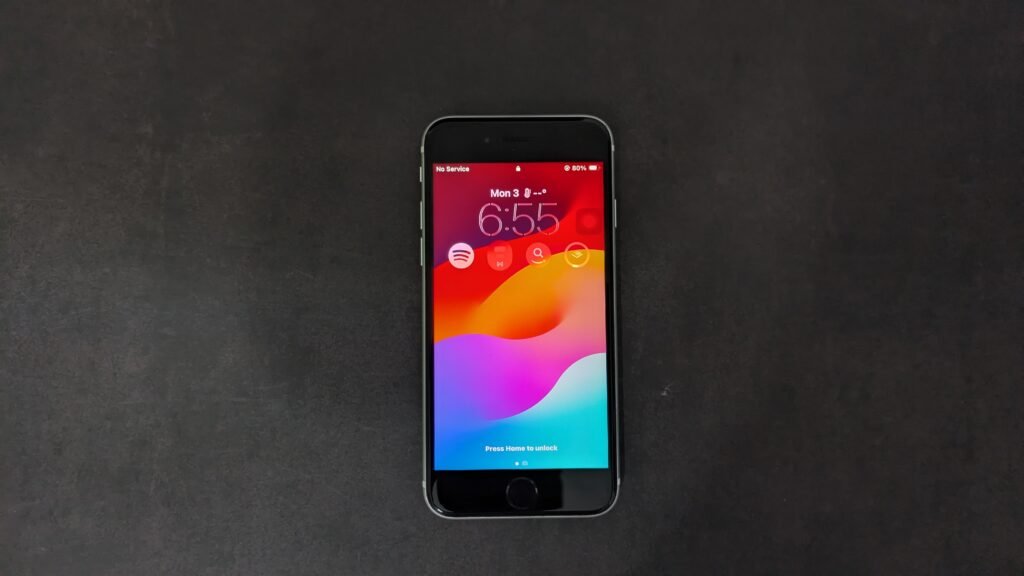
One of the biggest reasons I chose the iPhone SE (2020) was Apple’s reputation for long-term software support. Back in 2020, I wanted a phone that wouldn’t feel outdated after just two or three years. I wanted something that could continue evolving through software, and looking back today, I can confidently say that Apple largely delivered on that promise.
From 2020 to around 2023, the iPhone SE genuinely felt like using one of Apple’s latest iPhones from a software perspective. While it naturally missed a handful of hardware-dependent features, almost every major iOS update brought new capabilities that were also available on Apple’s flagship models. That constant stream of new features made the phone feel fresh year after year.
Major iOS releases were something I genuinely looked forward to. Every September, I found myself waiting for Apple to roll out the latest update, eager to install it, explore the new wallpapers, take screenshots of the changes, and experience everything that had been added. Those update days became an event in themselves.
I always preferred installing the stable public release and never used beta versions, which helped me avoid many of the problems early adopters sometimes experienced.
Among all the new features introduced over the years, Lock Screen Customisation and Widgets became my personal favourites. I had admired these features on Android for quite some time and often wished Apple would implement them in its own way. When they finally arrived, they completely changed how I personalised my iPhone and made the software feel even more enjoyable to use.
Not every feature became part of my daily routine, though. Focus Mode initially seemed exciting, but over time I found it more complicated than useful. For my workflow, it felt unnecessarily cluttered, and I eventually stopped using it altogether. Personally, I believe that when a feature starts feeling more complex than helpful, it loses much of its value.
In terms of stability, iOS remained one of the strongest aspects of the iPhone SE throughout my ownership. Most updates were reliable, and serious software issues were extremely rare. On a few occasions, I noticed small bugs or minor inconsistencies after installing a new version, but they were never significant enough to affect my everyday use. Overall, the software experience remained impressively stable across six years.
Privacy was another area where Apple fully met my expectations. Even today, I feel more confident using my iPhone for sensitive tasks than many other devices I’ve owned. One thing I personally noticed was the difference in advertising behaviour.
On my Android phones, searching for a product often resulted in related ads appearing across multiple apps and websites shortly afterwards. I rarely experienced that on my iPhone. Safari also offered several privacy-focused features that reinforced the feeling that Apple genuinely prioritised user privacy rather than treating it as a marketing slogan.
Coming from Android, the clean and clutter-free interface immediately stood out. There were no unnecessary pre-installed third-party apps, no heavily customised user interface, and very little that distracted me from simply using the phone. That simplicity was refreshing and remained one of my favourite aspects of iOS throughout my ownership.
There were, however, a few areas where I still preferred Android. Notifications offered fewer customisation options during much of my ownership, and even something as simple as setting a custom ringtone felt unnecessarily complicated at the time. I also never became a big fan of Apple’s default keyboard. Although I continued using it, I always preferred the flexibility and convenience offered by Google’s Gboard.
Long-term software support ultimately proved to be one of the smartest reasons behind my purchase. Even today, the iPhone SE continued receiving the latest versions of iOS, something very few smartphones can claim. That consistent support helped the device stay relevant far longer than I originally expected.
Ironically, software updates also became one of the reasons the phone gradually started feeling slower. During the first few years, every update seemed to improve the experience. Over time, as iOS became more demanding, newer versions naturally pushed the hardware closer to its limits.
In 2026, I even found myself wondering whether I should continue installing every major update. Despite that, I still chose to stay on the latest stable version.
If someone asked me what kept the iPhone SE relevant for so many years, my answer wouldn’t be limited to the A13 Bionic chip.
I would point to two things: software and camera. The processor naturally aged over time, but iOS kept introducing new features that made the phone feel modern long after its launch. And the camera consistently delivered the kind of natural photos and outstanding video quality that made me reach for this phone again and again.
Looking back today, I’d rate the software experience 9.5/10 in 2020. In 2026, I’d still give it a strong 8/10. Not because iOS has become worse, but because the hardware can no longer showcase the software with the same speed and fluidity it once did. If I had to describe my overall software experience in just two words, they would be: “Confidently satisfying.”
📸 Camera Experience After 6 Years






The camera was one of the biggest reasons I bought the iPhone SE (2020) and even after six years, it’s one of the few areas where the phone continues to impress me.
If I had to describe it in one sentence, I’d simply say this: the camera still feels balanced, accurate, and trustworthy. It may no longer compete with today’s flagship smartphones in every scenario, but it continues to deliver results that look natural rather than artificially enhanced.
One of the things I’ve always appreciated about the iPhone SE is its approach to photography. Photos still look realistic, with colours that closely resemble what my eyes actually saw. Apple never tried to make images look overly saturated or aggressively processed, and that philosophy has aged remarkably well. Even today, many of the photos I capture on this phone still look pleasing without requiring additional editing.
Human skin tones have also remained one of its strengths. Whether I was taking photos of family members, friends, or selfies, the camera consistently produced balanced skin colours without applying the kind of heavy beauty filters that many smartphones relied on. The result always felt more authentic than artificially attractive.
Portrait Mode became one of my favourite camera features over the years. I used it extensively, especially because I genuinely liked the Stage Light portrait effect. The edge detection was surprisingly accurate for a single-camera smartphone, and the background blur looked convincing enough for everyday photography. It wasn’t perfect in every situation, but it consistently produced results that I was happy to share.
In daylight, the camera continues to perform impressively even in 2026. Images remain detailed, colours stay balanced, and overall exposure is handled very well. For outdoor photography, I still find the iPhone SE capable of producing photographs that don’t immediately reveal the phone’s age.
Low-light photography, however, tells another story. This has always been one of the phone’s weaker areas, and it was something I expected from the beginning. The relatively small sensor struggles to retain fine details in challenging lighting conditions, especially around bright light sources at night.
The absence of Night Mode makes this limitation even more noticeable. Personally, I always felt that Apple could have brought Night Mode to this hardware, but without it, the iPhone SE clearly falls behind newer smartphones after sunset.
The 7MP front camera still performs well in good lighting conditions. Selfies remain bright and vibrant, and even today I find the quality perfectly acceptable for video calls and everyday social media use.
Where the iPhone SE really surprises me is video recording.
Even after using the Google Pixel 7a extensively, I still find myself preferring the iPhone SE whenever recording an important moment. The stabilisation remains excellent, colours look balanced without appearing either dull or oversaturated, and exposure control is consistently reliable.
Bright skies are handled naturally without losing too much detail, dynamic range remains impressive for its age, and perhaps most importantly, the audio recording quality has always been exceptionally clear. Throughout my years of using this phone, I never found myself worrying about the quality of the videos it captured.
Camera performance has also remained remarkably responsive. The Camera app opens almost instantly, autofocus locks quickly, and the shutter responds with very little delay. Even today, if I need to capture a moment in a hurry, I rarely feel like the phone will let me down. That reliability has been one of the camera’s greatest strengths throughout my ownership.
For content creators and travellers, I still believe the iPhone SE offers a surprisingly dependable camera system—particularly for daylight video recording. Modern smartphones certainly provide more features, larger sensors, and better low-light performance, but there is something reassuring about a camera that consistently produces predictable, natural-looking results every single time.
Some of my favourite memories over the past six years were captured using this phone. Family moments, trips, everyday life, and even countless photos of pets continue to live in my gallery because this was the camera I trusted most. Looking back through those pictures today reminds me that a great camera isn’t just about image quality—it’s about preserving memories you’ll still enjoy years later.
Looking back today, I’d rate the photo quality 8/10 in 2020 and 7/10 in 2026. Video recording, however, remains one of the strongest reasons to appreciate this phone. I’d comfortably rate it 10/10 in 2020 and 9/10 in 2026.
If someone handed me both the iPhone SE (2020) and the Google Pixel 7a and asked me to record an important family moment, I would still instinctively reach for the iPhone. The Pixel is certainly capable, but I simply have greater confidence in the iPhone’s stabilisation, colour consistency, and crystal-clear audio recording. For me, those qualities matter more than chasing the latest camera hardware. If you’re interested in how Google’s long-term software and camera experience compares, you can also read my Google Pixel 7a Long-Term Review (2026).
🔋 Battery Life After 6 Years
Battery life has always been one of the iPhone SE (2020)’s biggest compromises, and interestingly, that was true even when the phone was brand new. Unlike many long-term reviews where the battery only becomes a concern after years of use, my experience with the SE was different. Even in 2020, I considered its battery life average rather than impressive.
The reason was simple: the phone’s compact design left room for only a relatively small battery of around 1,821mAh. During my early days with the device, I usually managed around three hours of screen-on time. On normal days it was manageable, but whenever my usage became heavy, I sometimes found myself charging the phone two or even three times before the day ended. It was clear from the beginning that battery endurance wasn’t one of the phone’s strengths.
Six years later, the situation has naturally tightened. Today, under normal usage, I get roughly 1.5 to 2 hours of screen-on time. If I start using demanding apps or spend more time on the camera, the battery can drain in close to an hour. A full charge now lasts only around two hours of active use, but considering that this is still the original battery after six years, I honestly don’t find that surprising.
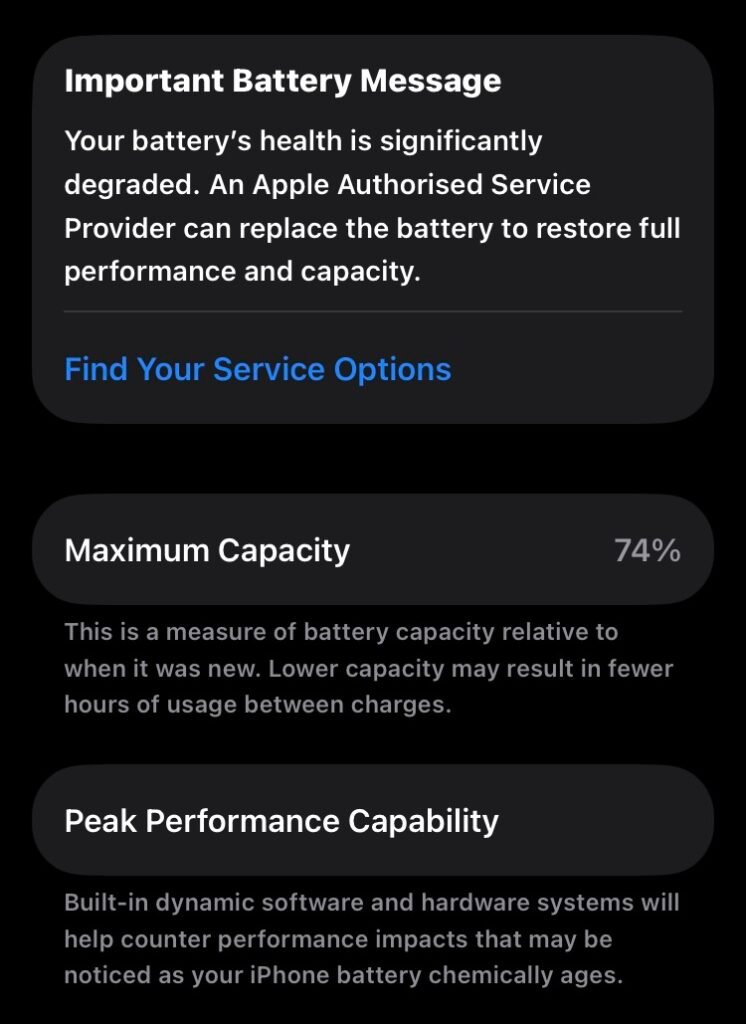
One detail that still amazes me is the battery health. Even today, my iPhone reports 74% Battery Health, and interestingly, it has remained at that figure since 2024. While the actual endurance has certainly declined, seeing the battery health remain unchanged for such a long period has been quite unexpected.
I first started noticing a significant decline in battery life around 2023, roughly three years after purchasing the phone. That timing felt perfectly reasonable to me because lithium-ion batteries naturally degrade with age. I never considered it a defect—it was simply the expected result of years of daily charging and regular use.
Like most smartphones, demanding tasks consume the battery much faster. Instagram has consistently been one of the biggest battery drainers in my experience. Navigation and prolonged mobile data usage also reduce battery life quite noticeably. YouTube, however, has always been relatively efficient and consumes far less power than I initially expected.
There is, however, one aspect of this battery that continues to impress me even today: standby performance. If I leave the phone untouched overnight, it usually loses only around 2–4% of its charge. Even after six years, that level of standby efficiency is genuinely impressive. In fact, based on my own experience, it still performs better in standby than my Google Pixel 7a.
Charging has been fairly straightforward throughout my ownership. For the first few years, I used the original 5W charger that came in the box and never really felt the need to upgrade. Later, after buying my Pixel phone, I occasionally charged the iPhone using the Pixel charger, which noticeably reduced charging time. Even today, the phone reaches around 50% in roughly 30 minutes, while a full charge takes approximately 1 hour and 15–20 minutes.
One thing I truly appreciate is the battery’s reliability. Despite its age and reduced capacity, the phone has never unexpectedly shut down, even when the battery percentage became very low. That’s something I genuinely admire because sudden shutdowns are a common problem on many ageing smartphones, yet I never experienced them with my iPhone SE.
Interestingly, I never noticed the battery becoming weaker because of excessive heating, nor did the ageing battery make the phone run noticeably hotter during normal use. When I needed to extend battery life while travelling or spending long hours away from home, Low Power Mode proved to be genuinely useful. It consistently helped squeeze extra use out of the remaining charge whenever I needed it most.
The moment I finally realised that the iPhone SE could no longer serve as my primary smartphone came in September 2025. During that period, I was spending a lot of time at the hospital, constantly receiving calls and WhatsApp messages from family members and relatives. The battery simply couldn’t keep up with those demands anymore. That was the point when I accepted that, despite still working perfectly well, it was time to move on to another primary device.
Would replacing the battery make the phone better today? Yes, to some extent. A fresh battery would certainly improve day-to-day usability. But after six years, the battery is no longer the phone’s only limitation. Time has naturally affected other aspects of the device as well. Even so, I have no complaints. This phone served me faithfully for years, and I genuinely appreciate how long it remained dependable.
Looking back, I’d rate the battery 6/10 in 2020. In 2026, I’d give it 4/10. My biggest criticism has always been the battery capacity itself—I believe Apple could have included a slightly larger battery without compromising the overall experience. On the other hand, if there’s one thing I continue to admire, it’s the outstanding standby efficiency and the fact that the phone has never once shut down unexpectedly because of battery instability.
Those small details may not appear on a specification sheet, but after six years of ownership, they matter far more than numbers.
🔊 Speakers, Calling & Haptics After 6 Years
Audio quality is one of those areas where the iPhone SE (2020) has naturally shown its age. While the phone still functions perfectly well, the speaker performance today is noticeably different from what I experienced when it was new.
Back in 2020, the stereo speakers genuinely impressed me. They were loud, clear, and delivered surprisingly punchy bass for such a compact smartphone. Watching YouTube videos, listening to music, or even playing games felt immersive despite the phone’s small size.
Six years later, the speakers are no longer what they once were. The maximum volume has dropped noticeably, and at higher levels I can hear a slight amount of distortion. Bass has also become much weaker over time. Vocals remain reasonably clear, but the overall richness and clarity that I enjoyed during the early years have gradually faded.
For casual listening in a quiet room, the speakers are still perfectly usable. However, in even mildly noisy environments, I now prefer using earphones because the built-in speakers simply don’t have enough volume or clarity to cut through background noise anymore.
Calling performance, on the other hand, has aged much better. Voice quality during calls remains dependable, and the microphone continues to capture my voice clearly. Friends and family have never complained about hearing me during calls, which says a lot about the consistency of Apple’s microphone tuning over the years.
The only noticeable change is the earpiece volume. Compared to when the phone was new, incoming voices now sound slightly quieter. Even so, call quality itself remains reliable. I have never experienced any major issues while using the phone for regular conversations.
One area where the iPhone SE still feels surprisingly premium is the Taptic Engine. Even after six years, the haptic feedback remains strong, precise, and incredibly satisfying. Every vibration feels intentional rather than harsh, and I still believe it outperforms the haptics found in many budget Android smartphones available today. It is one of those small details that quietly reminds you why iPhones have long been praised for their overall refinement.
The iconic Mute Switch has also held up remarkably well. Since the day I bought this phone, I have used it almost every day, and even after years of regular use, it continues to function exactly as it should. It’s a simple feature, but one that has consistently made the iPhone more convenient to use.
The Lightning port has also proven to be surprisingly durable. Dust has naturally accumulated inside over the years, but charging remains completely reliable. My EarPods still connect without any issues. During the years when I regularly transferred files using the Lightning cable, I never encountered any connection problems either.
Perhaps the most impressive part of this entire section is reliability. Despite using this phone extensively for six years, I have never had to repair the speakers, microphone, charging port, mute switch, or haptic motor. Every one of those components continues to function today, which speaks volumes about the phone’s overall build quality.
However, I would not recommend the iPhone SE (2020) today purely for multimedia consumption. The combination of its small 4.7-inch display and aging speakers means the experience no longer matches modern expectations. While it remains perfectly usable, larger smartphones with newer speakers simply offer a much more enjoyable experience for watching movies or consuming content.
Looking back, I’d rate the speaker quality 9/10 in 2020, dropping to 6/10 in 2026 as age has noticeably affected both volume and clarity. Calling quality earns 10/10 in 2020 and 7.5/10 in 2026, mainly because of the slightly quieter earpiece rather than any serious functional issue. Haptics, however, remain exceptional. They deserve 10/10 in 2020 and still an outstanding 9/10 in 2026.
If someone asked me which hardware feature of the iPhone SE still feels flagship-like after six years, my answer would be simple: the Taptic Engine. I’d also include the camera, but purely from a hardware refinement perspective, the haptics continue to deliver a premium experience every single day.
📶 Connectivity & Everyday Reliability After 6 Years
One of the biggest reasons I bought the iPhone SE (2020) was the confidence that it would remain a dependable smartphone for years. Looking back after six years, I can comfortably say that this is one promise the phone has largely fulfilled.
Starting with cellular connectivity, I rarely faced any major problems during my ownership. Call quality remained dependable, and the 4G connection was stable most of the time. There were occasional situations where weak network coverage resulted in slower mobile data speeds, and I did experience a few instances of network drops over the years. However, those moments were relatively uncommon and never became a recurring frustration.
Wi-Fi performance has been consistently excellent from day one. The phone has always maintained a stable connection, and I honestly can’t remember facing random disconnections or noticeable speed drops while connected to a reliable Wi-Fi network.
Bluetooth reliability has also been impressive. Whether I was pairing AirPods, connecting to a soundbar, or using other Bluetooth audio devices, the pairing process was quick, and the connection remained stable throughout regular use. It has always been one of those features that simply worked without demanding attention.
For navigation, I relied almost entirely on Google Maps rather than Apple Maps. Throughout my usage, location accuracy, route guidance, and GPS performance remained consistently reliable. The phone locked onto my location quickly and never gave me a reason to doubt it while travelling.
Mobile data performance has been equally dependable. Apart from the occasional limitations caused by weak network coverage, the device itself never gave me any reason to complain about its 4G connectivity.
I only used the Personal Hotspot feature occasionally to connect my laptop or my Pixel phone. Whenever I did, the connection remained stable without unexpected disconnections. Although this wasn’t a feature I relied on daily, it always worked whenever I needed it.
One feature that continues to impress me even after six years is Touch ID. The fingerprint sensor still unlocks the phone surprisingly quickly and remains highly accurate. Even with slightly wet fingers, I rarely encountered recognition problems. More importantly, I never felt that the sensor became noticeably slower with age, which is genuinely impressive for a device this old.
The phone’s sensors have also aged remarkably well. Auto Brightness still reacts quickly to changing lighting conditions, the proximity sensor has never caused issues during calls, and the remaining sensors continue to function exactly as expected. None of them has ever required attention or repair.
Although I never used FaceTime extensively, I spent countless hours on WhatsApp video calls. The overall experience remained consistently enjoyable, with stable performance and dependable call quality. For my everyday communication needs, I was always satisfied with how the phone handled video calls.
Choosing the 128GB variant proved to be one of the smartest decisions I made while buying this phone. Over the years, I realised that the 64GB model would likely have become restrictive much sooner. More importantly, despite six years of heavy usage, I never experienced storage corruption, unexpected data loss, or any similar reliability issues.
Perhaps the most impressive aspect of this entire ownership experience is durability. Throughout six years of extensive daily use, I never reached a point where I felt that any hardware component was beginning to fail unexpectedly. The SIM tray, cameras, buttons, Lightning port, vibration motor, and other essential hardware components have continued working reliably without requiring repairs.
If you asked whether I trusted this phone with important everyday responsibilities, my answer would be an immediate yes. Whether it involved banking, OTP verification, important calls, travel bookings, or other essential tasks, I never hesitated to rely on it.
In fact, that sense of trust was one of the main reasons I bought the iPhone SE in the first place, and over six years, it consistently lived up to that expectation.
Looking back, I’d rate Connectivity 10/10 in 2020 and 8.5/10 in 2026, mainly because of the occasional network inconsistencies that naturally appeared over time. For overall reliability, however, I’d confidently give it 10/10 in 2020 and 9/10 in 2026. Very few smartphones manage to remain this dependable after six years of continuous use.
Beyond the camera and software, the things that continue to impress me the most are the remarkably fast Touch ID, the outstanding Taptic Engine, and the phone’s exceptional build quality. These are the small details that still make the iPhone SE feel thoughtfully engineered, even years after its release.
❤️ Things I Still Love After 6 Years
After living with the iPhone SE (2020) for six years, there are still several things that make me appreciate this phone every time I pick it up. Some aspects have naturally aged, while others continue to remind me why I chose it in the first place.
The first is undoubtedly the camera. Even today, it remains one of the most reliable smartphone cameras I’ve used. Whether I’m capturing a quick family moment or recording a short video, I still trust it to deliver natural-looking results without unnecessary processing. Every time I use it, I’m reminded that buying this phone was the right decision for my needs.
The second is the Taptic Engine. Six years later, the haptic feedback still feels precise, refined, and genuinely premium. It remains one of those small details that quietly improves the overall experience every single day.
Another feature I continue to appreciate is Touch ID. Despite the phone’s age, the fingerprint sensor remains fast and dependable. It still unlocks the device quickly and consistently, proving that great hardware doesn’t suddenly become obsolete simply because it gets older.
The phone’s build quality also deserves special mention. Every time I hold it, I still get the feeling that I’m using a thoughtfully engineered device. Even after years of daily use, it continues to feel solid, well-built, and reassuringly durable.
Privacy is another reason why this phone has continued earning my trust over the years. From the beginning, I wanted a smartphone that would feel secure enough for my personal data, banking, and everyday life. Even today, I continue to feel that same confidence whenever I use it.
Perhaps the biggest lesson this phone has taught me is the value of long-term software support. Apple consistently delivered major software updates on time, allowing the phone to keep evolving long after its launch. Few things contribute more to a smartphone’s longevity than timely software updates, and I still believe this is one of Apple’s greatest strengths.
That doesn’t mean I want Apple to bring back this exact design today. While I have fond memories of using the iPhone SE, I wouldn’t buy a modern smartphone with the same small display and limited battery capacity. My expectations from a smartphone have changed over the years, and today’s usage demands a larger screen and longer battery life.
Still, every time I open the camera and see how naturally it captures both photos and videos, I can’t help but smile. It reminds me that choosing this phone in 2020 was one of the best technology decisions I made.
If someone asked me what truly defines the iPhone SE (2020), I wouldn’t point to a single feature. Its real identity lies in the way all of its strengths come together. The camera, the software, the haptics, the build quality, the privacy, and the overall reliability all come together to create an ownership experience that feels far greater than the sum of its individual specifications.
😕 Things That Didn’t Age Well
No smartphone stays perfect forever, and the iPhone SE (2020) is no exception. While there are many things I still genuinely love about this phone, six years of daily use have also made its limitations impossible to ignore.
The biggest weakness has always been battery life.
Even when the phone was brand new, its battery was never impressive. The compact body simply couldn’t accommodate a large battery, and that limitation became more noticeable with every passing year. Today, battery life is undoubtedly the one area that affects my experience the most, and if I could change just one thing about this phone, it would be giving it a significantly larger battery.
The second limitation is the 4.7-inch display.
When I bought the phone in 2020, I actually liked its compact size. It felt comfortable to hold and easy to use with one hand. But technology and content have changed dramatically over the years. Today’s apps, videos, websites, and everyday workflows are designed around much larger displays. Because of that, the screen now feels more restrictive than convenient.
Another feature I frequently missed was an ultra-wide camera.
The main camera has remained incredibly reliable, but there have been many moments when I wished I could capture a wider scene without stepping backwards. While it never ruined the overall camera experience, an ultra-wide lens would have made this phone much more versatile.
The absence of 5G connectivity is another limitation that has become increasingly noticeable.
Back in 2020, 4G was more than enough for my needs, so I never considered it a drawback. But in 2026, when 5G has become widely available, its absence is something I genuinely notice. The phone still performs well on 4G, but it no longer feels future-ready in this area.
Then comes the Lightning port.
In 2020, it was perfectly acceptable because almost every Apple accessory still relied on it. Today, however, USB-C has become the universal standard. Having to carry a separate Lightning cable now feels unnecessary, and this is one of the few design decisions that genuinely feels outdated in everyday life.
Another area that has naturally declined over time is the speaker quality.
After six years of regular use, the speakers no longer sound as rich or loud as they once did. Vocals are still understandable, but the overall clarity and fullness have noticeably faded. It isn’t a deal-breaker, but it’s certainly something anyone familiar with the phone would recognise.
The moment I truly realised that the iPhone SE was beginning to show its age came in 2025.
During a difficult period when I was spending long hours at the hospital, I depended heavily on my phone for calls and WhatsApp messages with family members. That was when the ageing battery simply couldn’t keep up anymore. It wasn’t a software issue or a performance problem—it was the battery that finally made me realise this phone could no longer serve as my primary device.
Some compromises are also inevitable if someone decides to use the iPhone SE (2020) as a daily driver in 2026. You’ll need to accept the limited battery life, the small 60Hz display, the absence of an ultra-wide camera, the lack of 5G, and the continued use of the Lightning port. None of these individually ruin the experience, but together they make it clear that this is a smartphone from a different era.
Interestingly, I don’t consider the 3GB RAM to be the biggest issue. Yes, it occasionally shows its limitations, especially with modern apps, but thanks to Apple’s optimisation, the phone still feels better than I expected in many everyday tasks. Likewise, I understand why Apple reserved some features for its more expensive iPhones. However, if there was one compromise I wish they hadn’t made, it would be the battery capacity. A larger battery would have transformed the long-term ownership experience far more than any additional camera or premium feature.
At the end of the day, the biggest weakness of the iPhone SE (2020) isn’t its processor, software, or build quality.
It’s the battery life.
Everything else feels like the natural result of a six-year-old smartphone ageing gracefully. The battery, however, is the one limitation that consistently reminds me how much time has passed.
Final Verdict: 6 Years Later, Do I Regret Buying the iPhone SE (2020)?
After using the iPhone SE (2020) as my primary smartphone for nearly six years, I can confidently say that this phone gave me exactly what I had hoped for when I bought it in October 2020.
Looking back today, I don’t think of this phone only as a piece of technology. It has been a companion through an important phase of my life. Many of the photos, videos, memories, conversations, and milestones that are closest to my heart were captured or experienced through this little device. Every time I pick it up, I’m reminded that buying it was one of the best technology decisions I made.
Of course, time has changed many things.
The battery has become its biggest weakness. The small display no longer fits today’s content consumption habits. The absence of 5G, USB-C, and an ultra-wide camera also makes the phone feel dated in 2026. These are genuine limitations, and ignoring them would make this review incomplete.
But despite all of that, I never found myself regretting the purchase.
The clean software, dependable performance, outstanding camera consistency, reliable privacy features, excellent haptics, fast Touch ID, and surprisingly durable hardware continued to remind me why I chose this phone in the first place. Even after six years, those strengths haven’t disappeared—they’ve simply been accompanied by the natural compromises of an ageing smartphone.
If someone asked whether I would buy the iPhone SE (2020) again for ₹29,749 in 2020, my answer would still be yes.
Because at that point in my life, this phone perfectly matched what I needed: a secure, reliable smartphone with long software support, a powerful processor, and cameras I could trust without overthinking every shot.
Would I recommend buying one today?
Not really.
Technology has moved on, and there are simply better choices in 2026. However, if someone finds a well-maintained unit in the used market for around ₹7,000, understands all of its limitations, and specifically wants the classic compact iPhone experience, it can still make sense. For most people, though, I’d suggest looking at newer options.
One thing I also want to make clear is that this review isn’t meant to convince anyone to buy—or avoid—the iPhone SE (2020).
This is simply my journey with a phone that stayed with me for six years.
My experience may be different from yours, and that’s perfectly fine. Every long-term review is shaped by the way its owner uses the device, the expectations they have, and the role the phone plays in their life. Everything I’ve written here comes from my own day-to-day ownership, not from specifications or someone else’s opinion.
If I had to describe the iPhone SE (2020) in just three words, they would be:
Secure. Reliable. Confident.
Even today, I wouldn’t exchange this phone for a newer iPhone simply because of the memories attached to it. It stood by me when I genuinely needed a dependable device, and for that reason alone, it has earned a permanent place in my collection. I hope to keep it for years to come—not as my daily driver, but as a reminder of a chapter of my life and as something I can one day show to the next generation.
Overall Rating
- 2020: 9/10
- 2026: 6/10
In the end, I believe choosing any piece of technology is less about chasing specifications and more about understanding your own needs. If your priorities are clear and you know how you’ll actually use a device, you’re far more likely to make a decision you’ll still be happy with years later. That’s exactly what happened with my iPhone SE (2020). It wasn’t perfect—but for the life I was living when I bought it, it was the right phone at the right time.
3 Comments